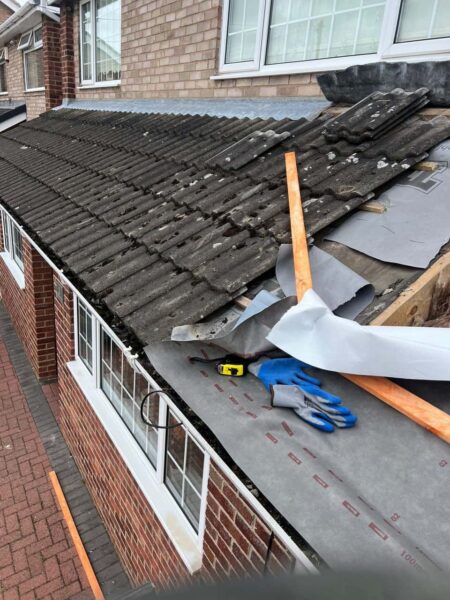
What Are the Warning Signs That a Garage Roof Needs Repair?
Garage roofs are sometimes overlooked because they do not cover the main living areas of a property. However, a damaged garage roof can allow water to affect stored belongings, electrical equipment, internal finishes and the roof structure itself.
Some defects are obvious, such as active dripping or a missing tile. Others develop gradually and may only become noticeable as discolouration, persistent dampness or a change in the shape of the roof. Recognising these early signs can help prevent a localised problem from spreading.
For property owners in Rushden, Northamptonshire, a professional inspection can establish whether the roof needs a focused repair or more extensive attention.
Which Signs Indicate That a Garage Roof May Need Repairing?
The warning signs vary according to whether the garage has a pitched, felt or other flat roofing system. Both the exterior and interior should be considered when assessing its condition.
Water Stains Inside the Garage
Dark marks on the ceiling, walls or roof timbers often indicate that moisture has entered the building. These stains may become more visible after rainfall and then fade as the area dries.
The location of a stain does not always identify the precise external defect. Water can travel along roof timbers, underlay or decking before becoming visible indoors. A proper inspection should trace its likely route rather than treating only the area directly above the mark.
Persistent Drips or Damp Patches
Active dripping during rainfall is a clear indication that the roof is no longer fully weatherproof. Even a slow or intermittent leak deserves attention, as repeated moisture can affect timber, insulation and stored items.
Damp patches that remain between periods of rain may indicate that materials are drying slowly or that water has become trapped within the roof construction. Ventilation and condensation should also be considered before the cause is confirmed.
Cracks, Splits or Blisters on a Flat Roof
Felt and other flat roof coverings can deteriorate through age, weather exposure and movement. Cracks or open seams may allow rainwater to reach the deck beneath.
Blisters are raised areas formed when moisture or air becomes trapped within the covering. Not every blister leaks immediately, but foot traffic, further movement or changing temperatures may cause it to split.
The roof should be assessed before applying surface sealants, as these may conceal the defect without resolving damage beneath the covering.
Water Is Pooling on the Surface
Flat roofs are formed with a slight fall so that rainwater can move towards an outlet or edge. Persistent ponding may indicate blocked drainage, settlement or an inadequate surface gradient.
Standing water increases the time that moisture remains in contact with the covering. It can also collect around seams, repairs and other vulnerable points.
A small amount of water shortly after rain may disperse naturally, but pools that remain for extended periods justify closer inspection.
Tiles or Slates Are Missing or Displaced
On a pitched garage roof, missing or slipped tiles expose the underlay to wind and rain. The underlay offers secondary protection but is not intended to act as the main roof covering indefinitely.
A displaced tile may result from failed fixings, broken nibs, deteriorated battens or weather damage. The surrounding tiles should also be checked, as movement in one area may reveal a wider weakness.
The Roofline Appears Uneven
Sagging, dipping or other visible changes in shape can indicate problems with the roof deck or supporting timbers. On a flat roof, a depression may also collect water and place further pressure on weakened materials.
An uneven appearance does not reveal the cause by itself. Moisture damage, age-related deterioration or movement within the structure may all be responsible. Professional assessment is needed before deciding what type of repair is appropriate.
Edges and Junctions Are Deteriorating
Roof edges, wall abutments, gutters and flashing are common points of weakness. Felt may lift around the perimeter, while leadwork can split or pull away from masonry.
Water entering at an edge can travel beneath the main covering, making the source difficult to identify from indoors. Particular attention should be given to areas where the garage roof meets another wall or roofing section.
Gutters Are Overflowing or Pulling Away
Blocked or damaged guttering can allow water to spill back against the roof edge and external walls. Loose brackets, leaking joints and obstructed outlets can all interfere with drainage.
Staining beneath gutters, persistent overflow or water running down the walls suggests that the rainwater system needs attention. The roof edge should also be inspected for deterioration caused by repeated saturation.
Interior Timbers Look Dark or Feel Soft
Roof timbers may show staining after prolonged exposure to moisture. In more advanced cases, they can begin to soften, distort or develop visible deterioration.
The source of the moisture must be identified before damaged materials are addressed. Replacing a small area of timber without repairing the roof covering above will leave the cause unresolved.
Musty Smells or Condensation Keep Returning
A persistent musty smell can indicate hidden moisture within the garage. However, not all dampness comes from a roof leak.
Condensation can form when humid air meets a cold roof surface, particularly where ventilation is limited. General moisture across a wide area may suggest condensation, while staining that worsens after rain is more likely to indicate water ingress.
A professional inspection can distinguish between these causes and prevent unnecessary work to the wrong part of the roof.
Previous Repairs Are Failing
Old patches, lifting sealant or recurring leaks can indicate that an earlier repair is no longer effective. The new problem may be within the repaired area or caused by deterioration nearby.
Repeatedly covering the same section may provide only temporary relief. The surrounding roof covering, deck and junctions should be examined to determine the full extent of the defect.
Why Early Inspection Is Important
A small split, slipped tile or leaking joint may initially affect only a limited section. If moisture continues entering, it can spread into the roof deck, timbers and interior of the garage.
DSC Roofing Rushden can inspect garage roofs in Rushden, Northamptonshire, identify the source of deterioration and determine whether a localised repair is suitable. This focused approach helps ensure that any work addresses the underlying defect rather than simply covering its visible symptoms.
Conclusion
Warning signs that a garage roof needs repair include internal staining, active leaks, surface cracks, displaced tiles, persistent ponding and changes in the roofline. Damaged edges, defective guttering and recurring dampness also deserve professional attention.
Not every sign indicates widespread failure, and many localised defects can be repaired when identified early. If you have concerns about a garage roof in Rushden, Northamptonshire, contact DSC Roofing Rushden to arrange a professional inspection.
Call us on: 01933 823 229
Click here to find out more about DSC Roofing Rushden
Click here to complete our contact form and see how we can help with your roofing needs.